
The t7 legacy
A Lifelong Connection to Horses
Horses have been part of my life for as long as I can remember.
My first ride was at 11 months old. I rode double with my aunt for five hours, fell asleep on the horse, and still screamed when it was time to get off.
From the beginning, there was a connection—but over time that connection turned into curiosity.
I wanted to understand not just how to ride horses, but how they move, how they think, and what their bodies are trying to tell us.
From Horsemanship to Understanding Movement
My background includes working with cowhorse and cutting horses, including time spent under the guidance of Brad Pederson.
Working with performance horses taught me how much precision, balance, and timing matter.
It also made one thing very clear:
When something isn’t working, it’s often not a training problem—it’s a movement or comfort problem.
That realization led me deeper into biomechanics and bodywork.
Education and Perspective
I hold a Bachelor of Science in Psychology and am currently studying neuroscience, with a focus on how the nervous system influences movement and behaviour.
I have also completed equine therapy training and continue to study how the horse’s body functions as an integrated system.
In addition, I am a certified consultant through the Soil Food Web School founded by Elaine Ingham, which has shaped how I think about living systems, balance, and interconnectedness.
This combination of practical experience and scientific study allows me to approach horses from multiple perspectives.
The T7 Legacy
T7 Equine is built on the land where the original T7 ranch once stood—the brand of the founders of Goodlow.
Carrying that brand forward is about more than a name.
It represents a connection to the land, a respect for horses, and a commitment to doing things thoughtfully and with intention.
While the work has evolved, the values have not.
How I Work With Horses
I approach horses as whole systems.
Movement, behaviour, and the nervous system are all connected.
When a horse feels balanced, rhythm improves.
When rhythm improves, tension decreases.
When tension decreases, the horse becomes more willing and responsive.
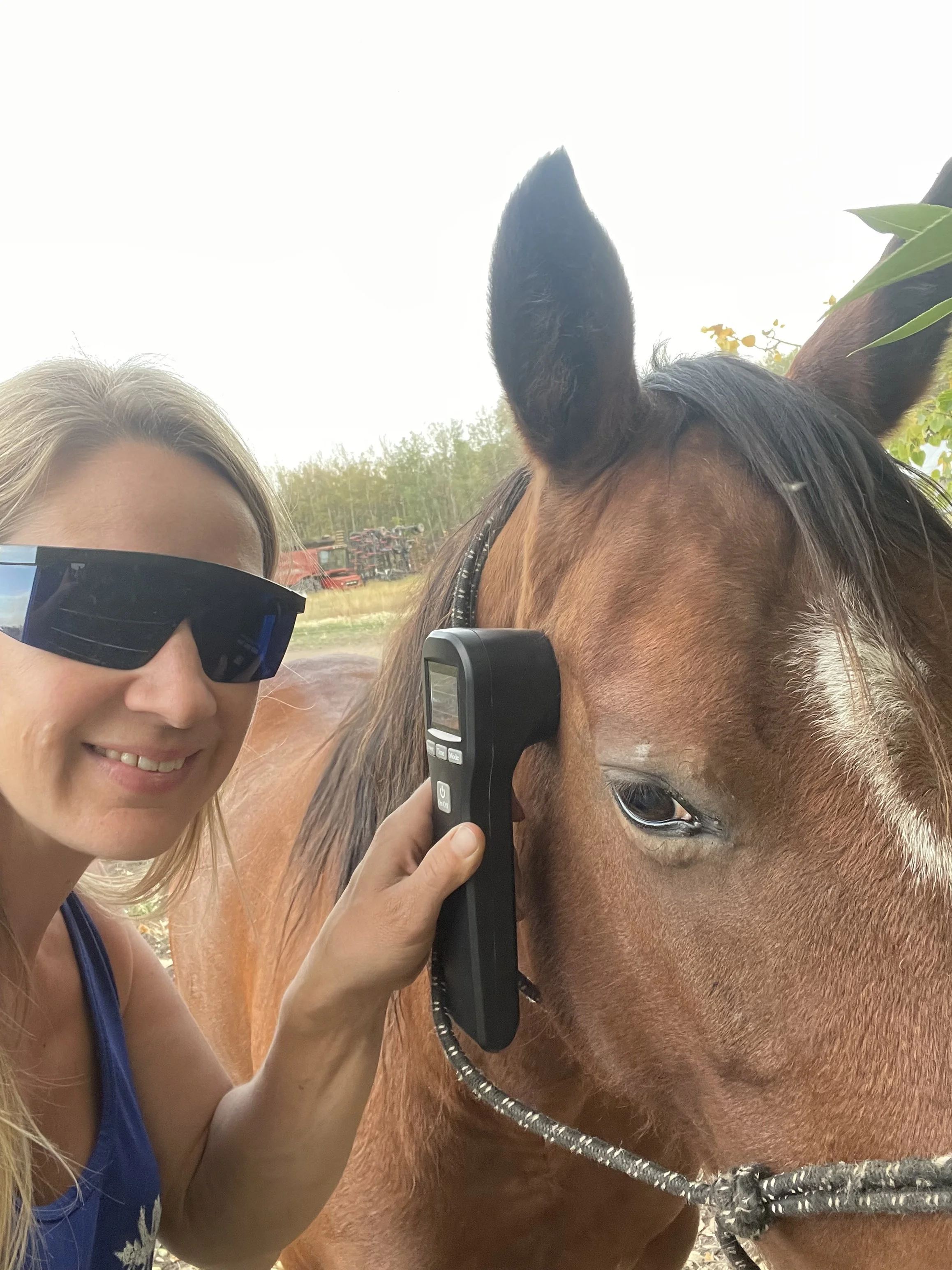
In my hands-on work, I focus on:
identifying areas of restriction
improving movement patterns
supporting the nervous system
helping horses move more freely and comfortably
Bridging Practice and Education
Alongside working directly with horses, I am passionate about helping riders understand what they are feeling and seeing.
Many of the challenges riders face—bracing, resistance, lack of forward movement—are not simply training issues. They are often connected to biomechanics, balance, or the horse’s nervous system.
By sharing what I’ve learned through both experience and study, my goal is to give riders a clearer understanding of their horses so they can work with them more effectively.
Because when riders understand the “why,” everything changes.
Why It Matters
Horses often tell us what they need—but not always in ways we immediately understand.
Bracing, resistance, and tension are often not disobedience. They are communication.
The goal is not to force the horse into movement, but to remove what is preventing it.
T7 Equine is about continuing a legacy—of working with horses, learning from them, and understanding them more deeply.